
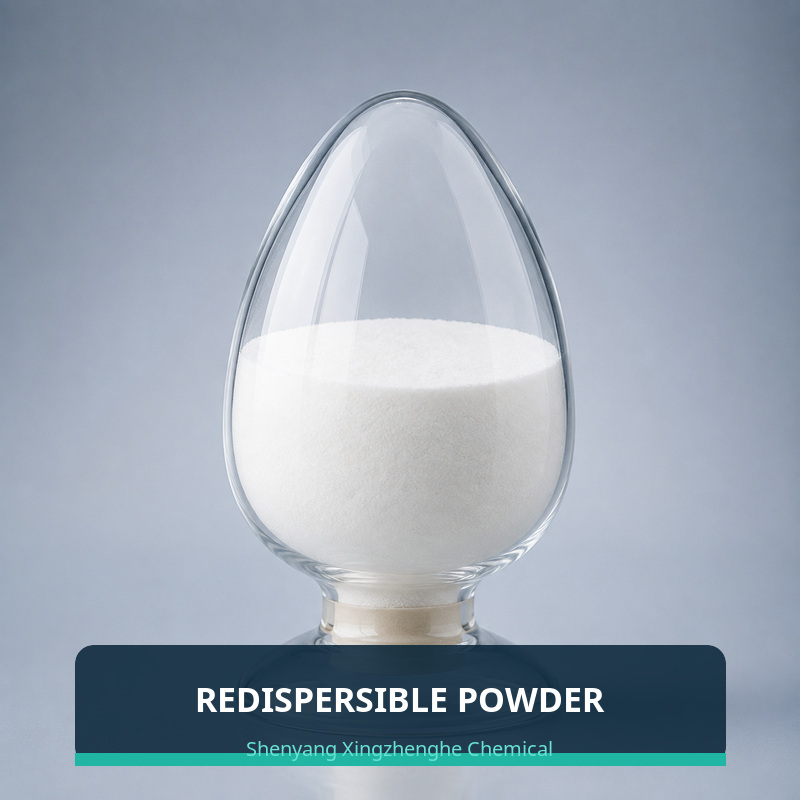
Redispersible Polymer Powder (RDP) is a water-soluble redispersible powder produced by spray-drying polymer emulsions. Its appearance is a white to off-white free-flowing powder, composed of polymer resin, protective colloids, and anti-caking agents. The conversion of emulsions into powder form through spray drying not only preserves the original bonding and film-forming properties of the polymer but also provides good storage stability and transportation convenience in dry powder form. This enables it to be uniformly mixed with cement, sand, and other mineral fillers to produce various dry-mix mortar products.
When dry-mix mortar is mixed with water on site, RDP rapidly redisperses into a stable polymer emulsion, with the dispersed polymer particles uniformly distributed throughout the mortar system. During the hardening process of the mortar, as water is consumed and evaporates, the polymer particles gradually lose water and fuse into films within the pores and interfacial transition zones of the inorganic materials. This polymer film connects cement hydration products, aggregate particles, and substrate interfaces at the microscopic level, forming an organic-inorganic interpenetrating composite structure that fundamentally improves multiple performance indicators of cement-based materials.
Based on the above mechanisms, RDP holds an important position in modern dry-mix mortar technology and is widely used in tile adhesives, interior and exterior wall putties, waterproofing mortars, self-leveling mortars, thermal insulation rendering mortars, and repair mortars.
Redispersibility is a key indicator of RDP product quality, directly determining whether the modification effect in mortar systems can be fully realized. RDP should be able to rapidly and uniformly disperse in water, forming a stable polymer emulsion without clumping or residue. This performance depends on multiple technical factors, including the selection and dosage of protective colloids in the spray-drying process, the surface design of polymer particles, and the uniform distribution of anti-caking agents. Under standard mixing conditions, RDP products with good performance can complete the redispersion process within minutes, resulting in a fine and smooth paste with minimal residue, with polymer particles uniformly suspended in the aqueous phase at submicron sizes.
Film-forming ability is the critical subsequent step for RDP to achieve mortar modification. After mortar containing RDP is applied to the substrate surface, as cement hydration consumes water and moisture evaporates to the external environment, the water content in the system gradually decreases. At this point, the uniformly dispersed polymer particles gradually approach, compress, deform, and eventually fuse, forming continuous or discontinuous polymer films. This film-forming process is related to the polymer's minimum film-forming temperature (MFT), and RDP products generally have a low film-forming temperature to ensure successful film formation under various climatic conditions.
The polymer film formed after film formation plays two primary roles in mortar. First, the polymer film spans across micro-cracks and interfacial zones between cement hydration products and aggregate particles, forming flexible bridges that connect the otherwise brittle rigid framework in a flexible manner, thereby enhancing overall tensile bond strength and flexural resistance. Second, the polymer film enriches the interfacial transition zone between mortar and substrate, improving the wettability and adhesion of cement paste to substrates such as tiles, insulation boards, and old concrete. This expands the bonding mechanism from purely mechanical interlocking to a combined mode of mechanical interlocking and physicochemical adsorption, fundamentally reducing common quality issues such as tile hollowing, exterior wall putty delamination, and rendering mortar cracking.
Cement-based materials have high compressive strength but relatively low tensile and flexural strength, exhibiting pronounced brittle characteristics. When subjected to external forces such as thermal expansion and contraction due to temperature changes, substrate settlement, or vibration loads, brittle cement mortar tends to develop micro-cracks at stress concentration points, which can further develop into penetrating cracks, compromising structural integrity and durability.
The polymer film introduced by RDP is equivalent to embedding numerous elastic flexible nodes within the rigid calcium silicate hydrate network structure of cement. When mortar is subjected to bending, impact, or thermal shrinkage stresses, the polymer film absorbs and dissipates part of the strain energy through its deformability, thereby delaying stress concentration to the cement matrix itself and postponing the initiation and propagation of macroscopic cracks. This flexible toughening mechanism effectively improves the deformability and crack resistance of mortar without significantly reducing material compressive strength.
In terms of practical engineering benefits, the value brought by flexible toughening manifests in multiple aspects. At the quality level, the significant improvement in bond strength and reduction in cracking risk directly decrease the occurrence of common quality issues such as tile hollowing and detachment, wall cracking and peeling, and rendering layer delamination, reducing post-delivery repair and rework costs. At the construction level, polymer-modified mortar exhibits improved water retention and lubricity, making troweling smoother and less labor-intensive, providing more ample open time for adhesive during notched trowel application, and making the flowability of self-leveling materials easier to control, thereby improving overall construction efficiency. At the economic level, through appropriate product selection and dosage control, formulation costs can be finely managed while maintaining performance levels, avoiding over-reliance on expensive additives and achieving an optimized solution that balances quality and cost.
The product range of RDP covers multiple sub-categories of cement-based dry-mix mortars. Different application scenarios have different performance priorities for polymer powder, requiring targeted selection based on specific engineering requirements.
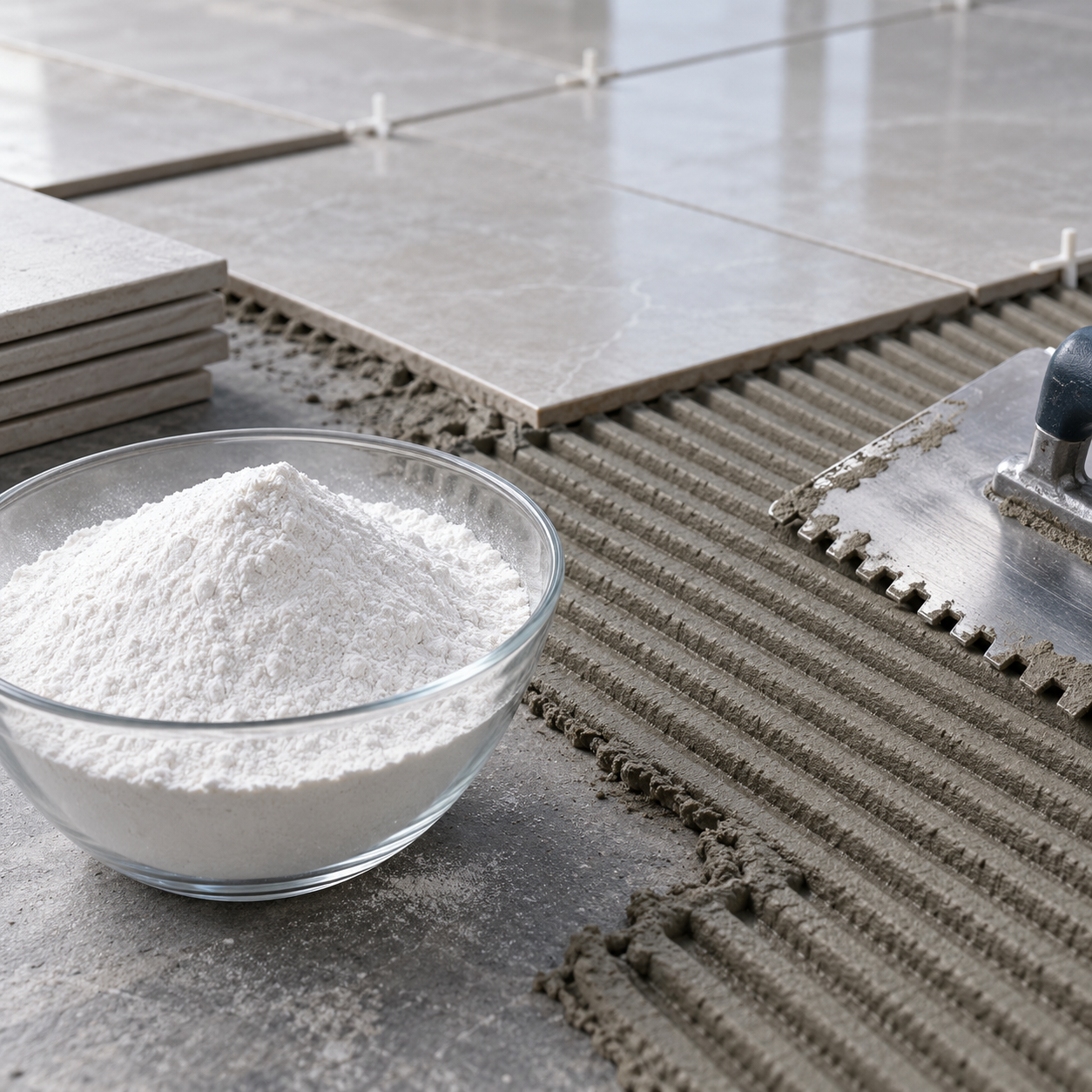
Tile Adhesives are one of the application areas for RDP. In modern construction, low water-absorption vitrified tiles, large-format ceramic thin slabs, and sintered stone slabs are increasingly common, and ordinary cement mortar cannot meet the safety requirements for their installation. Tile adhesives with RDP show significant improvement in tensile bond strength, with notable enhancements in water-resistant bond strength, heat-resistant bond strength, and bond strength after freeze-thaw cycles. Additionally, the flexible toughening effect of the polymer film effectively buffers the relative expansion and contraction stresses between the substrate and tiles caused by temperature changes, reducing the risk of later hollowing and detachment.
Interior and Exterior Wall Putties: For interior wall putties, RDP provides smoother application feel, good sandability, and fine surface finish. Exterior wall putties place greater emphasis on water resistance and crack resistance. Putty layers containing RDP develop dense surfaces after film formation, effectively sealing substrate capillaries, reducing the likelihood of later coating blistering or efflorescence, and enhancing the durability of the finishing system.
Waterproofing Mortar Systems: The addition of RDP reduces the connectivity of capillary pores in mortar, blocks water penetration pathways, and improves the impermeability grade. At the same time, the flexibility of the polymer film imparts a certain deformation-following capability to the waterproofing layer, allowing it to maintain integrity even when the substrate develops fine cracks due to settlement or thermal shrinkage, preventing leakage.
Self-Leveling Mortar requires high flowability, good leveling properties, and early strength. With the appropriate RDP grade, the rheological properties of the mortar can be improved without significantly increasing water demand, reducing bleeding and sedimentation stratification, while enhancing bond strength to the substrate and ensuring that the hardened surface meets flatness requirements without cracking.
Thermal Insulation Rendering Mortar, used as the protective layer in exterior insulation systems, needs to balance bond strength, flexibility, and weatherability. Through its toughening effect, RDP enables the rendering layer to withstand cyclic expansion and contraction stresses of insulation boards caused by temperature changes, maintaining the long-term stability of the entire insulation system and preventing moisture from penetrating the insulation layer through cracks in the protective layer, which would compromise insulation effectiveness and system longevity.
Different projects have varying requirements for mortar flexibility, water resistance, open time, and construction adaptability. A single RDP grade cannot cover all application scenarios. Therefore, a product range with multiple available grades is important for meeting diverse market needs.
General-Purpose Grade RDP is suitable for most conventional applications in indoor dry environments, such as tile adhesives and interior wall putties, offering good overall cost-effectiveness and meeting basic bond strength and construction performance requirements.
Flexible Waterproofing Grade is designed for exterior walls, kitchens, bathrooms, basements, and other humid environments or areas with significant deformation. It offers more prominent elongation at break and impermeability grade, providing higher deformability and water resistance while maintaining bond strength.
High-Bond Grade is intended for heavy tiles and large-format slab installation scenarios, focusing on rapid early bond strength development and long-term aging resistance to ensure installation safety under demanding conditions.
Additionally, RDP products with different glass transition temperatures (Tg) are suitable for different seasons and climatic conditions. Low-Tg products offer better flexibility, suitable for low-temperature environments or applications requiring high flexibility. High-Tg products have greater rigidity, suitable for high-temperature environments or applications with higher strength requirements.
When selecting products, users are advised to conduct small-batch trials based on specific mortar types, service environments, construction conditions, and performance targets, verifying key indicators such as tensile bond strength, open time, and flexibility to determine the matching grade and appropriate dosage range.
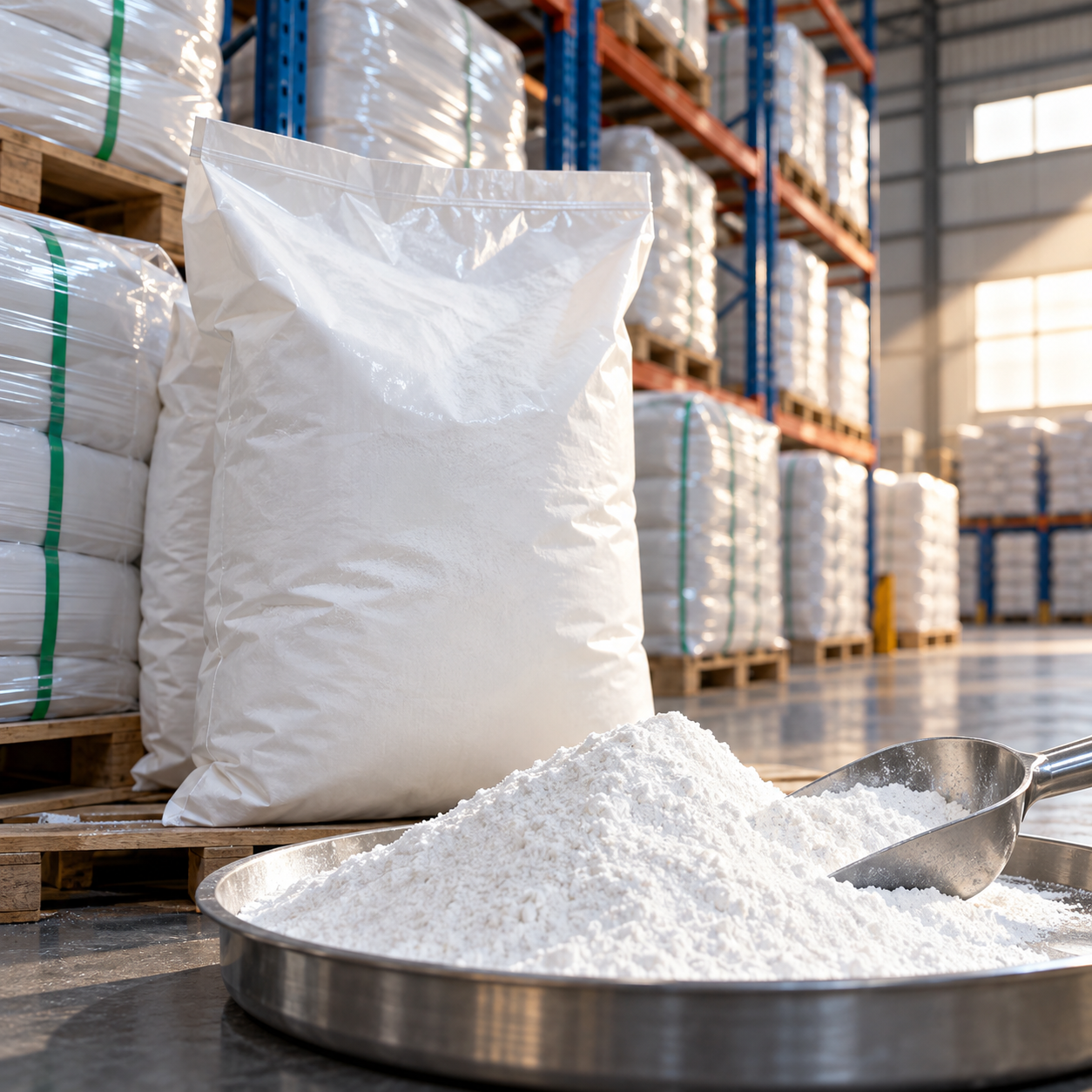
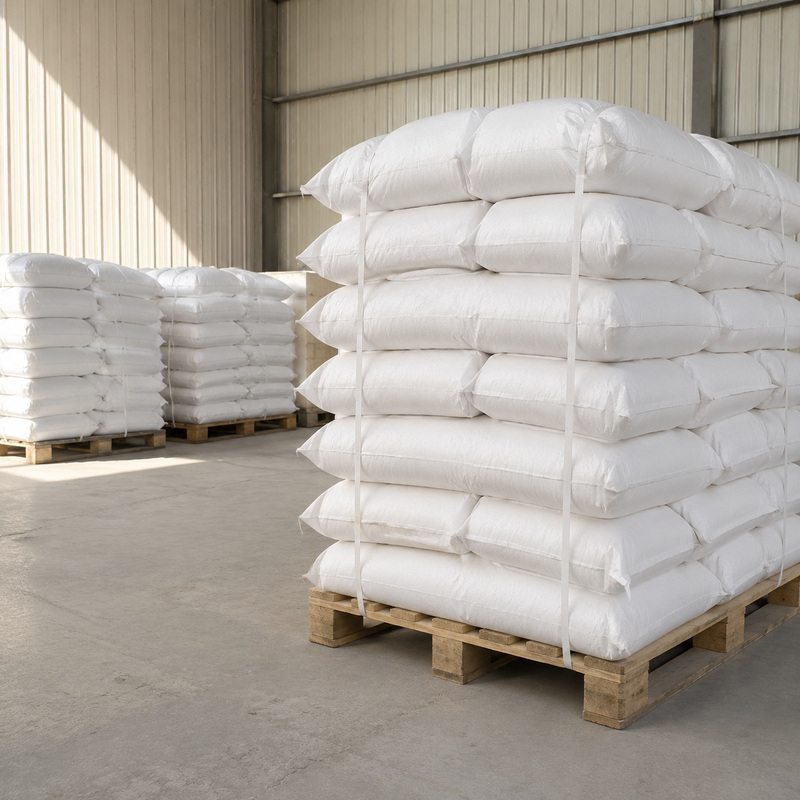
The standard packaging for RDP is generally 25 kg paper bags with inner moisture-proof liners, facilitating warehouse management, material handling, and use in automated production lines. This packaging specification accommodates both the large-scale production needs of dry-mix mortar plants and the flexibility requirements of small and medium-sized projects.
In terms of supply, the availability of sufficient stock and rapid order processing mechanisms ensures uninterrupted material supply during peak construction seasons or for urgent projects. Various shipping options, including small orders and full truckloads, are supported with flexible arrangements according to customer requirements. Products should be stored in a cool, dry place to prevent moisture absorption and caking. After opening, the product should be used promptly, and unused portions should be sealed for storage. Under normal storage conditions, product performance remains stable within its shelf life.
 Why Does RDP Change After Long-Term Storage? Moisture, Caking, Redispersion and Packaging Explained
 How Does Redispersible Polymer Powder (RDP) Improve the Performance of Tile Adhesive?
 How to Compare RDP Samples Before Changing Suppliers
 What Is Redispersible Polymer Powder (RDP)? How It Works in Dry Mix Mortar