
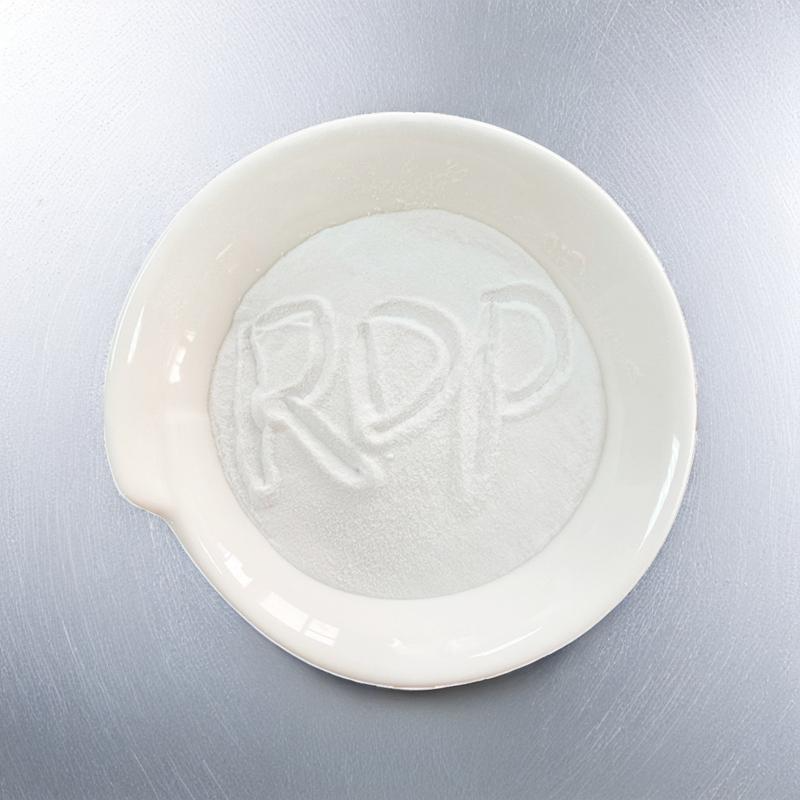
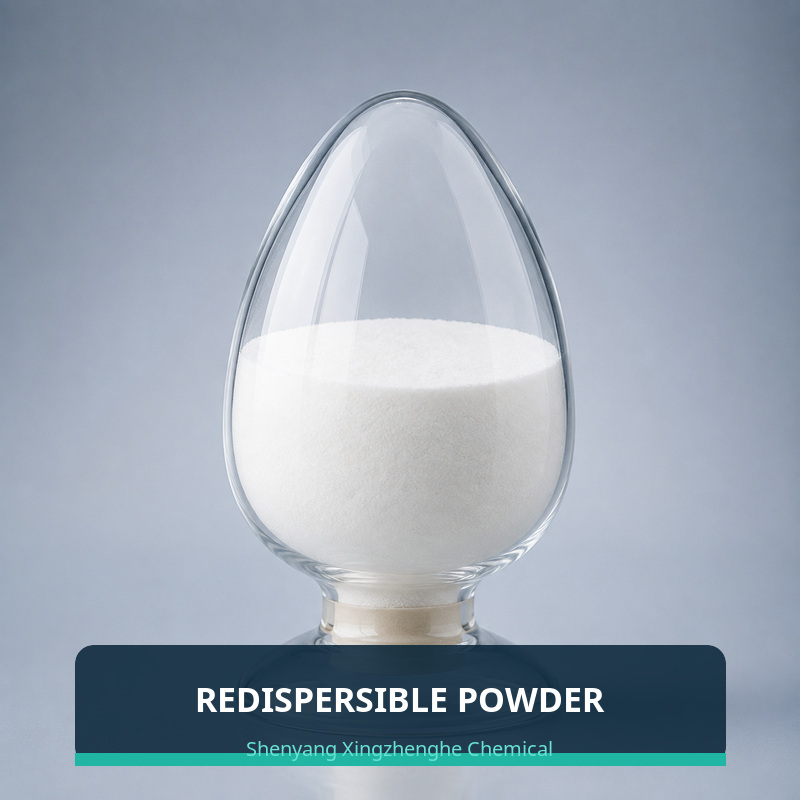
Redispersible Polymer Powder (RDP), as a polymer modification material, performs functional roles in bond strength enhancement, flexible crack resistance, workability improvement, and adaptation to diverse engineering requirements in dry-mix mortar systems through redispersion and film formation upon contact with water, as well as interfacial reinforcement. It is suitable for a range of building material products including tile adhesive, external thermal insulation finishing mortar, putty, and self-leveling compounds.
When mixed with water, RDP redisperses rapidly in the paste without forming lumps or residues, ensuring uniform distribution of the polymer component throughout the system. As water evaporates and cement hydration proceeds, polymer particles gradually coalesce and form continuous polymer films within the cement matrix and at interfacial transition zones.
The distribution of these polymer films within the hardened mortar connects cement hydration products, aggregate particles, and the substrate interface, forming an organic-inorganic interpenetrating network structure. This structure has a direct effect on improving tensile bond strength. In tile installation applications, polymer-modified tile adhesive forms stronger bonds with both the tile backing and the substrate wall surface, contributing to a reduction in the occurrence of hollowing and detachment. In exterior wall putty systems, the bridging effect of the polymer film enhances adhesion between the putty layer and the wall substrate, helping to reduce the risk of delamination and peeling.
The inherent rigidity and high brittleness of cement-based materials make them susceptible to cracking under bending loads, impact forces, or temperature-induced shrinkage stresses. The polymer films formed by RDP in the hardened mortar exhibit flexible characteristics, creating dispersed flexible nodes within the rigid cement skeleton.
When the mortar layer is subjected to external stress, these flexible nodes absorb and disperse strain energy through deformation, buffering stress concentration and thereby delaying crack initiation and propagation. This flexible modification effect is particularly important in external thermal insulation finishing mortars, where differential temperature deformation and drying shrinkage between the insulation layer and the surface layer require the finishing mortar to possess a certain degree of flexibility for accommodation. In repair mortars, the flexible nodes of the polymer film help accommodate substrate deformation without brittle cracking.
RDP contributes to improved mortar workability in several aspects. In terms of water retention, the addition of the polymer component helps reduce excessive evaporation and loss to the substrate, allowing the mortar to maintain suitable working condition for a longer period after application. In terms of lubrication, polymer particles act as ball bearings within the paste, reducing internal friction between particles and making troweling and application operations smoother.
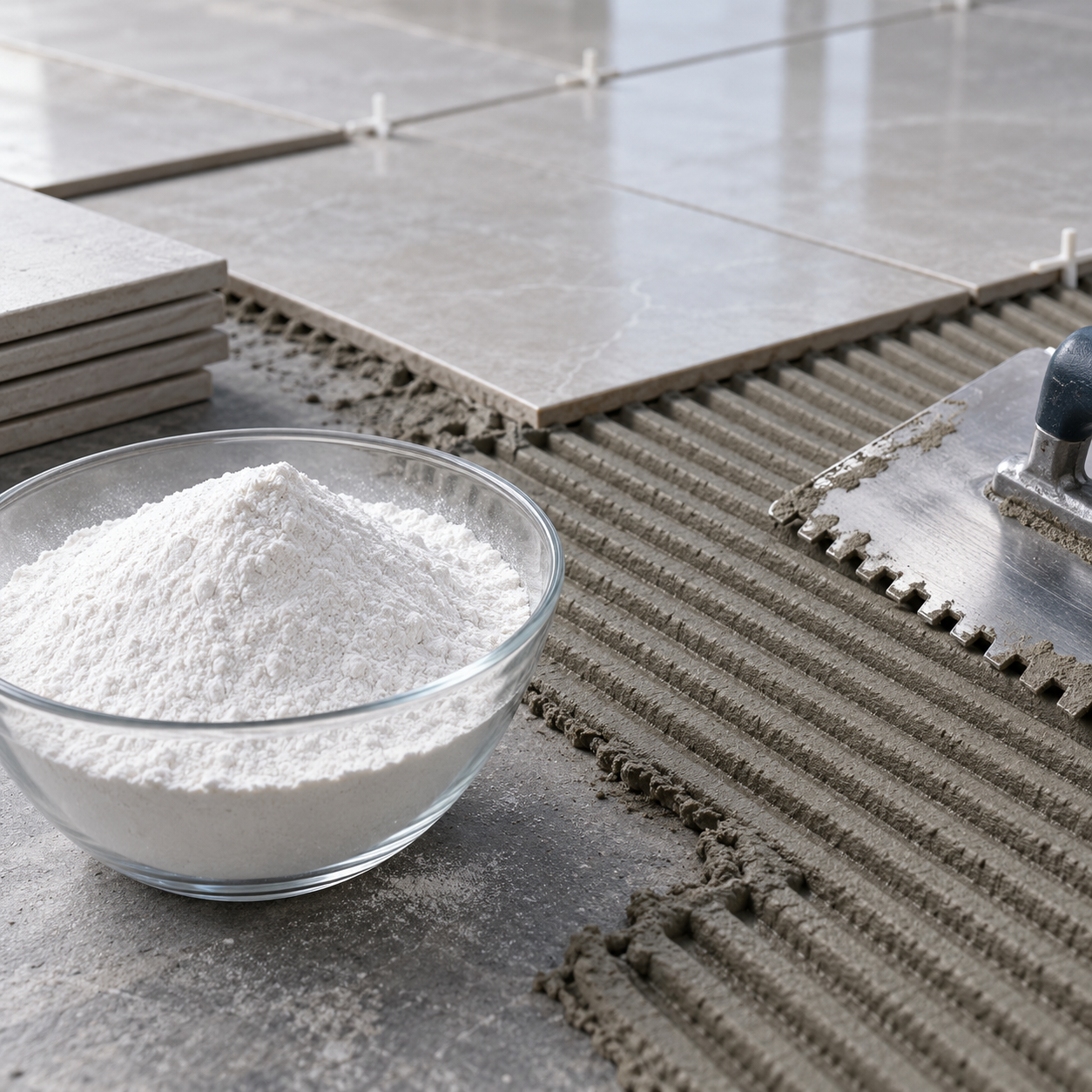
For tile adhesives, polymer-modified adhesive pastes maintain better ridge retention when applied with a notched trowel, with more generous open time allowing installers adequate time for tile adjustment and positioning. For self-leveling materials, the addition of RDP helps improve the controllability of flowability, allowing the paste to spread more uniformly under its own weight. Overall, reduced application resistance contributes to improved on-site work efficiency and reduced physical demands on installers.
RDP products are available in various grades to suit different engineering scenarios.
General-purpose grades are suitable for plastering mortars, masonry mortars, and other general applications, offering balanced performance that meets the bond strength and flexibility requirements under conventional construction conditions.
Flexible waterproofing grades have a lower glass transition temperature and more pronounced film flexibility, making them suitable for external thermal insulation finishing mortars, waterproofing mortars, and other applications with higher requirements for crack resistance and flexible deformation capacity.
High-bond grades contain higher polymer content or feature molecular structures designed for enhanced bond performance, with bond strength characteristics more specifically targeted for large-format tile installation, heavy tile fixing, and stone bonding applications requiring higher adhesion.
Different glass transition temperature products accommodate different seasons and climate conditions. Products with lower glass transition temperatures maintain a degree of flexibility at low temperatures, making them suitable for winter construction or cold regions. Products with moderate glass transition temperatures offer balanced performance under normal temperature conditions. When selecting a specific grade, consideration should be given to the climatic conditions of the project location, construction season, and performance requirements of the specific application.
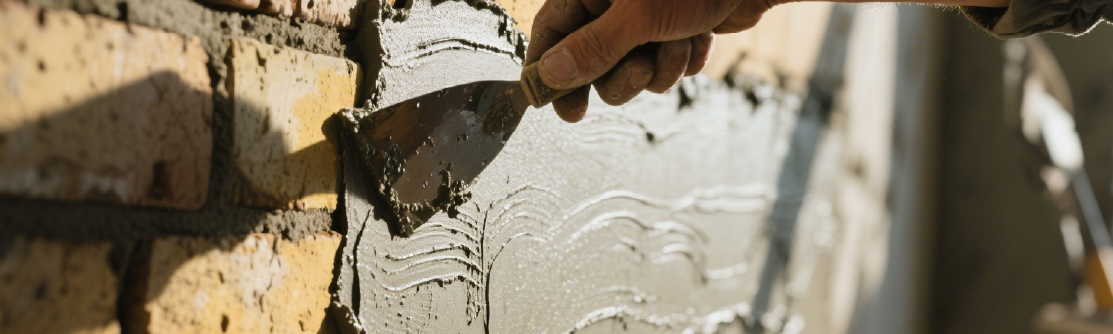
Product Application Guidelines
Dosage control is a key factor in RDP application. The actual addition rate should be adjusted according to ambient temperature and the specific composition of the mortar formulation. At higher temperatures, evaporation accelerates, and RDP dosage may be increased to ensure adequate film formation and bond strength. At lower temperatures, dosage may be reduced to avoid excessively slow curing affecting the construction schedule. Insufficient dosage results in inadequate bond strength and unsatisfactory mortar-to-substrate bonding. Excessive dosage may delay mortar curing and potentially affect subsequent construction activities. When adjusting dosage, stepwise fine-tuning with observation of mortar performance changes is recommended.
Pre-production trial mixing is a necessary step before large-scale use. Variations between different batches of cement, aggregates, fillers, and other admixtures may affect the bond enhancement and film formation performance of RDP in the formulation. Before formal large-scale production, trial mixing using the actual raw materials to be used on site is recommended, with testing of bond strength, water resistance, and workability. Only after confirming stable performance meeting requirements should bulk production proceed, to ensure consistent product quality across batches.
RDP, as a polymer modification material for dry-mix mortars, provides practical functions in bond strength enhancement, flexible crack resistance, and workability improvement through redispersion, film formation, and interfacial reinforcement mechanisms. General-purpose, flexible waterproofing, and high-bond grades, along with options featuring different glass transition temperatures, are available to suit tile adhesives, plastering mortars, external thermal insulation systems, putties, and self-leveling compounds. Appropriate grade selection and well-designed formulation are key factors in making full use of RDP's modification value in cement-based building material systems.
 Why Does RDP Change After Long-Term Storage? Moisture, Caking, Redispersion and Packaging Explained
 How Does Redispersible Polymer Powder (RDP) Improve the Performance of Tile Adhesive?
 How to Compare RDP Samples Before Changing Suppliers
 What Is Redispersible Polymer Powder (RDP)? How It Works in Dry Mix Mortar