
If you work with dry-mix mortar, you know that redispersible polymer powder (RDP) is the key material for performance improvement. But in practice, there are plenty of problems: how much should you add? Why does it still crack even with RDP? Do you need to adjust dosage between summer and winter? Can you blend two grades together?
This article does not cover film-forming mechanisms or molecular structures. Instead, it focuses on how to actually use RDP in production, how to adjust formulations, and how to troubleshoot when things go wrong.
1. How to Determine RDP Dosage
2. Reference Formulations for 5 Systems
3. Blending Two RDP Grades
4. Troubleshooting 5 Common Problems
5. Seasonal Adjustment Strategies
6. Simple Quality Testing Methods
7. Practical Cost Reduction Tips
8. Purchasing: How to Avoid Getting Cheated
9. Frequently Asked Questions
Many customers ask right away, "How much RDP should I add?" There is no universal answer. Dosage depends on several factors.
Performance requirements: Interior putty and exterior tile adhesive have very different RDP demands
Cement content: More cement means higher rigidity, which requires more RDP to balance flexibility
Substrate absorption: High-absorption substrates (aerated concrete, brick) need more RDP for water retention and film formation
Service environment: Outdoor, high temperature, freeze-thaw cycles require higher dosage
RDP grade: Different Tg and protective colloid content means different effective polymer levels
Do not guess the dosage. Follow these steps:
Check industry standards or customer requirements to identify target performance (e.g., tensile bond strength, flexural ratio)
Start from the low end of the recommended range, make 3-5 gradient test panels
After standard curing, test performance and find the lowest dosage that meets the target
Add 10-20% safety margin on top of that dosage
Run a pilot batch to verify consistency
Rule of thumb: The lowest dosage that meets performance requirements is the economical dosage. Adding more does not necessarily mean better performance; it can introduce side effects like excessive softness, stickiness, or wasted cost.
The following formulations are starting points. Actual formulations need to be adjusted based on local raw materials and climate conditions.
| Ingredient | Dosage (kg/ton) | Notes |
|---|---|---|
| Cement (42.5R) | 350-400 | Ordinary Portland cement |
| Quartz sand (graded) | 550-600 | 0.1-0.6mm, well graded |
| RDP | 5-10 | Tg about 0 to 5 degrees C |
| HPMC | 2-4 | Viscosity 30,000-100,000 mPa.s |
| Wood fiber | 0.5-2 | Anti-sag |
Key points: C1 grade tile adhesive does not need much RDP. 5-10 kg is enough. The key is to pick the right Tg: not too high (poor film formation) and not too low (poor heat resistance).
| Ingredient | Dosage (kg/ton) | Notes |
|---|---|---|
| Cement (42.5R) | 380-450 | Ordinary Portland cement |
| Quartz sand (graded) | 500-560 | Well graded |
| RDP | 10-15 | Tg about -5 to 5 degrees C |
| HPMC | 2-4 | Viscosity 30,000-100,000 mPa.s |
| Wood fiber | 1-3 | Anti-sag |
| Calcium formate | 5-10 | Accelerates early strength |
Key points: C2 grade needs higher bond strength and flexibility, so RDP dosage doubles. Adding calcium formate helps accelerate early strength and improves the construction experience.
| Ingredient | Dosage (kg/ton) | Notes |
|---|---|---|
| Cement (42.5R) | 300-400 | Ordinary Portland cement |
| EPS particles | 4-8 m3 | Particle size 2-5mm |
| RDP | 15-30 | Low Tg (-10 to -5 degrees C) |
| HPMC | 3-6 | Viscosity 10,000-50,000 mPa.s |
| Wood fiber | 2-4 | Anti-crack reinforcement |
| PP fiber | 0.5-1.5 | Secondary anti-crack |
Key points: Insulation mortar needs high RDP dosage because EPS particle surfaces need good polymer film for bonding. Low Tg grades are required for flexibility and crack resistance. High dosage means cost pressure, so consider blending with some PVA-type RDP.
| Ingredient | Dosage (kg/ton) | Notes |
|---|---|---|
| Cement (42.5R) | 300-400 | White cement or ordinary cement |
| Heavy calcium carbonate | 300-400 | 325-400 mesh |
| Quartz sand | 200-300 | 80-120 mesh |
| RDP | 10-20 | Tg about 0 to 10 degrees C |
| HPMC | 3-5 | Viscosity 100,000-150,000 mPa.s |
| Wood fiber | 1-3 | Anti-crack |
Key points: Exterior putty needs flexibility (flexural ratio of 3.0 or less), so RDP dosage cannot be too low. If using white cement, check RDP alkali resistance; some grades lose film performance in strong alkaline environments.
| Ingredient | Dosage (kg/ton) | Notes |
|---|---|---|
High-alumina cement / CSA cement | 200-300 | Fast-setting, early strength |
| Self-leveling sand | 500-600 | Strict gradation |
| RDP | 5-12 | High flexibility grade |
| HPMC | 1-3 | Low viscosity, does not affect flow |
| PCE superplasticizer | 2-5 | Ensures flowability |
| Defoamer | 1-3 | Eliminates air bubbles |
Key points: Self-leveling systems are sensitive. Too much RDP hurts flowability. Use a high-flexibility grade at lower dosage to meet flexural strength and wear resistance requirements. Defoamer is essential to prevent surface bubbles.
Many formulators use only one RDP grade. In practice, blending two grades often works better.
A single grade cannot provide both high strength and high flexibility
High Tg RDP provides hardness and cohesive strength, but the film is brittle
Low Tg RDP provides flexibility and film formation, but the film is too soft
Blending combines the advantages of both for balanced performance
| System | High Tg Ratio | Low Tg Ratio | Purpose |
|---|---|---|---|
| Standard tile adhesive | 60% | 40% | Balance bond strength and flexibility |
| Large-format tile adhesive | 40% | 60% | Emphasize flexibility for large panel deformation |
| Insulation mortar | 30% | 70% | Prioritize flexibility with adequate strength |
| Exterior putty | 50% | 50% | Balance flexibility and stain resistance |
| Bonding agent | 70% | 30% | Emphasize adhesion and sealing |
Practical tip: When blending, first dissolve both RDP grades separately in water, then mix the solutions together before making test panels. Do not just dump both powders into the mixer; they may not disperse evenly. Keep the total dosage the same; just adjust the ratio between the two grades.
"Blending always works better" - Not necessarily. If the two grades are chemically very different (e.g., one VAE system, one acrylic system), incompatibility can occur. Always verify with test panels before full production.
"Use more of the cheap one, less of the expensive one" - RDP cost is one part of formulation cost, but do not just look at unit price. If the cheaper grade needs higher dosage to achieve the same effect, the overall cost may be higher.
Possible causes:
RDP Tg too high, cannot form film properly at application temperature
Curing temperature too low (below 5 degrees C), film formation is hindered
Cement content too high, system too rigid
RDP dosage insufficient, polymer film not continuous
RDP quality poor, high ash content, low effective polymer
Troubleshooting steps:
First check RDP quality (ash test, film formation test)
Check curing conditions (temperature 15-25 degrees C, adequate humidity)
Verify Tg matches the application environment temperature
Increase dosage by 5 kg/ton, test again
If still failing, consider switching to a lower Tg grade
Possible causes:
Insufficient RDP dosage, not enough flexibility
RDP Tg too high, film too hard
Cement content too high, excessive shrinkage
Insufficient wood fiber dosage
Applied too thick or too thin, uneven drying
Solutions:
Increase RDP dosage (add 5 kg/ton each time, run comparison tests)
Switch to a lower Tg grade (below -10 degrees C)
Reduce cement content appropriately
Increase wood fiber to 3-4 kg/ton
Control single-pass thickness to 2-3cm
Cause analysis:
Winter temperature is low, RDP film formation is slow, early strength develops slowly
Low temperature also slows cement hydration; double impact
If RDP MFFT is above application temperature, film cannot form at all
Solutions:
Switch to a lower Tg / lower MFFT RDP grade for winter
Add accelerator (calcium formate 5-10 kg/ton) to speed up early strength
Increase cement dosage by 50-100 kg/ton
Provide thermal curing after application
Use separate summer and winter formulations; do not use one formula all year
Possible causes:
RDP dosage too high, polymer film too soft
RDP Tg too low, film remains tacky at room temperature
HPMC dosage too high, water retention too strong, drying too slow
High humidity, low temperature, poor drying conditions
Solutions:
Reduce RDP dosage or switch to a higher Tg grade
Reduce HPMC dosage by 0.5-1 kg/ton
Improve ventilation to speed up drying
For winter construction, ensure application temperature above 5 degrees C
Possible causes:
RDP itself has foaming tendency, entrains air during mixing
Defoamer dosage insufficient or wrong type
Mixing speed too fast, excessive air entrainment
Too much water added, bubbles cannot escape
Solutions:
Increase defoamer dosage (try increasing by 50% first)
Switch to a less-foaming defoamer type
Reduce mixing speed, control mixing time to 2-3 minutes
Strictly control water addition; do not add extra water just for flow
Reduce RDP dosage if performance allows
RDP dosage can be reduced by 10-15% (film formation is easy at high temperature)
Can use a slightly higher Tg grade for better heat resistance
HPMC dosage needs to increase (faster evaporation)
Add retarder to extend working time
Watch RDP storage conditions to prevent heat-induced caking
Increase RDP dosage by 10-20% (film formation is difficult at low temperature)
Switch to low Tg / low MFFT grades (ensure MFFT is below application temperature)
Add accelerator (calcium formate) for early strength
Increase cement dosage appropriately
HPMC dosage can be reduced by 10% (slower evaporation)
Never apply below 0 degrees C without special anti-freeze measures
Check sand moisture content and reduce mixing water accordingly
RDP dosage can be increased by 10% (wet substrate affects film formation)
Watch for moisture in storage; RDP that has absorbed moisture and caked must not be used
Protect freshly applied mortar from rain
Not every facility has a full testing lab. The following methods can be done on-site or in a small factory.
Purpose: Determine inorganic filler content in RDP.
Method: Weigh 5g of sample, place in muffle furnace at 550 degrees C for 2 hours. Cool and weigh residue. Calculate ash percentage.
Criteria: Quality RDP ash content should be below 12%. High ash means more filler, less effective polymer.
Purpose: Assess film-forming ability of RDP.
Method: Prepare 10% RDP water solution, spread evenly on a glass plate (about 1mm thick), cure at 23 degrees C for 48 hours.
Criteria: Quality product forms a continuous, transparent, elastic film. If the film is discontinuous, white, or brittle, film formation is poor.
Purpose: Check RDP dispersion in water.
Method: Add 10g RDP to 100ml water, stir for 5 minutes, observe.
Criteria: Quality product disperses uniformly into a milky suspension with no lumps or sediment. Large undissolved particles indicate quality problems.
Quality RDP should have no strong chemical odor. A pungent smell may indicate unreacted monomers or volatile organic compounds; such products should not be used.
RDP is one of the expensive ingredients. Reducing cost is not about cutting dosage; it is about optimizing the overall formulation:
Improve sand gradation to reduce cement demand, indirectly lowering RDP requirements
Blend different Tg grades strategically to substitute expensive grades with cost-effective ones
Use high-efficiency superplasticizers to reduce water-binder ratio and total binder content
Select grades with moderate protective colloid content (excess protective colloid adds cost without necessarily improving performance)
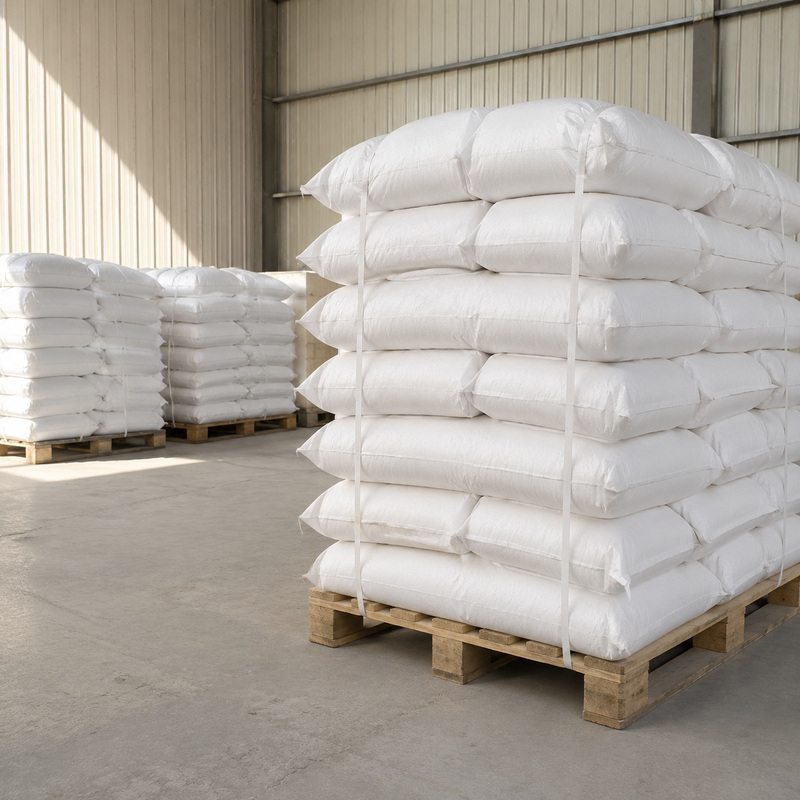
Store RDP properly to prevent moisture absorption; use opened bags promptly
Clean mixing equipment regularly to reduce residue waste
Strictly control water addition; batches with incorrect ratios can only be scrapped
Keep production records to find stable formulation parameters and reduce trial-and-error costs
False ash content claims: Label says 8% ash, actual is 15% or more. Always test ash content yourself upon receipt.
Grade substitution: Using lower-grade product to replace premium grade; cannot tell by appearance. Run film formation test and verify Tg.
Filler adulteration: Large amounts of calcium carbonate or starch added to bulk up. Ash test and iodine test can detect this.
Batch inconsistency: Large variation between batches. Test every incoming batch.
Visual check: white powder, no lumps, no foreign matter
Ash content test: 12% or below
Film formation test: continuous, transparent, elastic
Dispersion test: uniform dispersion, no lumps
Solid content: 98% or above (oven drying method)
Small-batch trial: verify actual performance
Dry, ventilated warehouse, temperature 5-30 degrees C
Store off the ground on pallets
Avoid direct sunlight
Shelf life generally 12 months; expired product must be retested before use
Reseal opened bags tightly and use promptly
We supply redispersible polymer powder in multiple grades (VAE / ethylene-vinyl acetate system) for different application requirements, with technical support and formulation optimization services.
Professional Supplier: Shenyang Xingzhenghe Chemical Co., Ltd.
 How to Compare RDP Samples Before Changing Suppliers
 What Is Redispersible Polymer Powder (RDP)? How It Works in Dry Mix Mortar
 How to Select Redispersible Polymer Powder for Tile Adhesive
 Redispersible Polymer Powder for ETICS Mortar: Performance and Selection Guide