
1. What Is Redispersible Polymer Powder (RDP)?
2. Technical Parameters of VAE-Based RDP
3. The Re-Dispersion and Film-Formation Mechanism
4. Eight Major Application Fields
5. Quantified Performance Improvements
6. How to Select the Right RDP Grade
7. RDP vs. HPMC: Complementary Roles in Mortar
8. Storage, Handling & Quality Control
9. FAQ
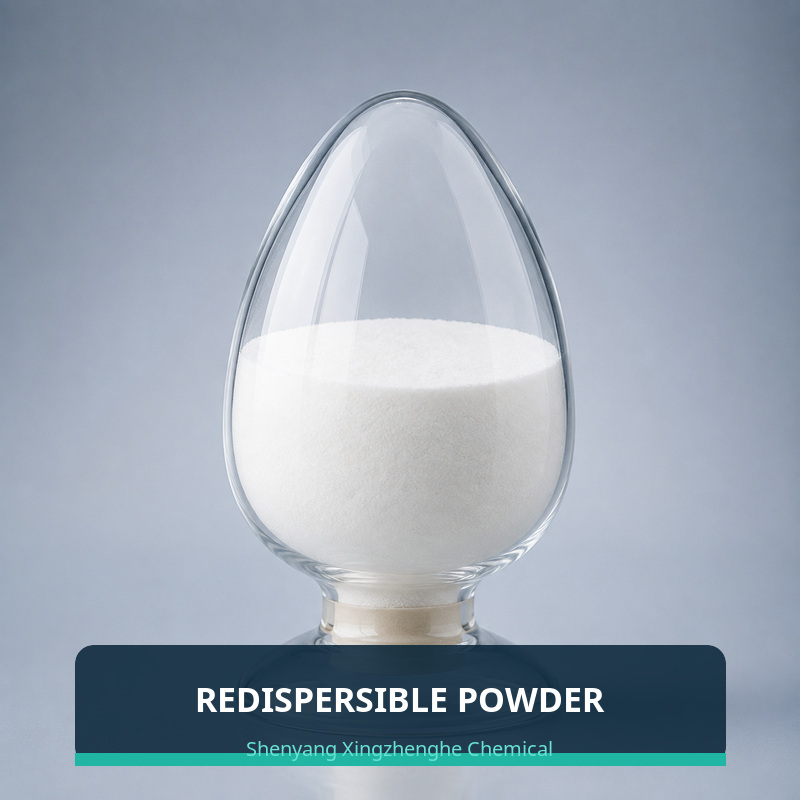
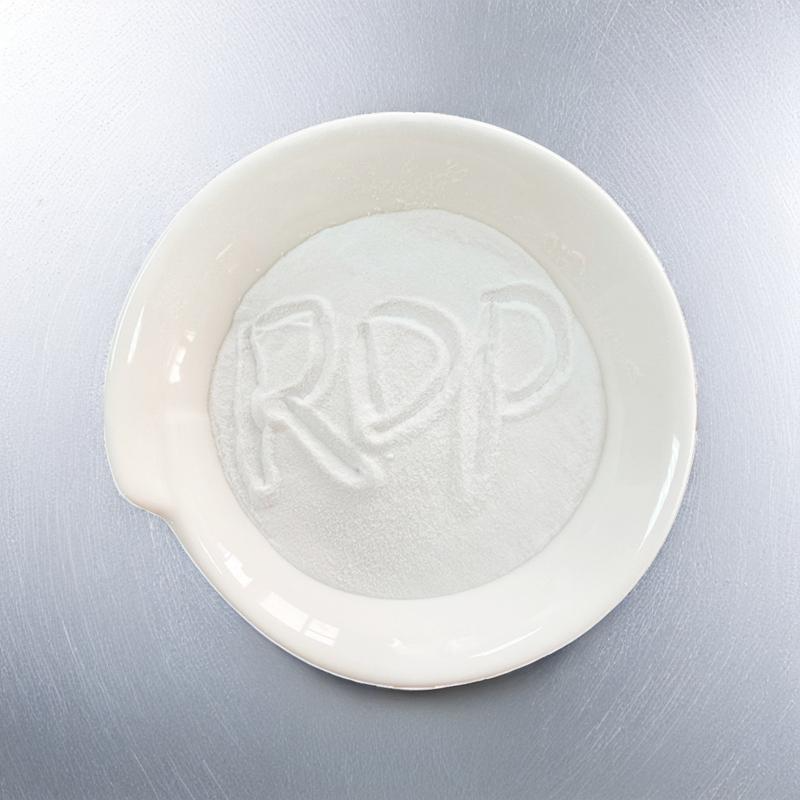
Redispersible polymer powder (RDP), also known as re-dispersible latex powder, is a thermoplastic polymer powder produced by spray-drying an aqueous polymer emulsion. The most common base polymer is vinyl acetate-ethylene (VAE) copolymer, though other formulations may include vinyl acetate-versatate, acrylic, or styrene-butadiene systems.
When added to dry-mortar mixes, RDP remains in powder form during storage and transportation. Upon mixing with water at the construction site, the polymer particles re-disperse into an aqueous emulsion. As the cementitious matrix hydrates and dries, the polymer particles coalesce into a continuous film that creates a polymer-modified microstructure within the hardened mortar.
RDP is manufactured using a protective colloid system, typically polyvinyl alcohol (PVA), which stabilizes the polymer particles during spray drying and enables stable re-dispersion in water. Anti-caking agents such as calcium carbonate or talc are added to prevent particle agglomeration during storage.
The following table presents typical technical parameters for a standard VAE-based RDP grade used in construction applications:
| Parameter | Typical Value |
|---|---|
| Base Polymer | VAE Copolymer (Vinyl Acetate-Ethylene) |
| Appearance | White or slightly yellowish free-flowing powder |
| Solid Content | ≥ 98% |
| Ash Content (dry basis) | 8% - 15% (depends on grade) |
| Bulk Density | 400 - 650 g/L |
| Average Particle Size | 80 - 200 micrometers |
| Minimum Film-Formation Temperature (MFFT) | 0 - 10 degrees Celsius |
| Re-Dispersion Stability | Stable emulsion after re-dispersion in water |
| Glass Transition Temperature (Tg) | -5 to +15 degrees Celsius (depends on grade) |
| Protective Colloid | Polyvinyl Alcohol (PVA) |
| pH of 10% Aqueous Dispersion | 6.0 - 9.0 |
| Packaging | 25 kg multi-layer paper bag with PE liner |
Different application categories require RDP grades with varying ethylene content, Tg, MFFT, and protective colloid levels. Selecting the appropriate grade is critical for achieving the desired balance of flexibility, strength, and workability.
Understanding how RDP works requires examining the sequential physical processes that occur from mixing to final hardened mortar:
When water is added to the dry-mortar mix, the RDP particles wet and disperse back into their original polymer emulsion form. The protective colloid (PVA) re-dissolves and stabilizes the polymer particles in suspension. This stage typically occurs within the first few minutes of mixing.
As cement hydration proceeds, water is consumed and the interstitial space between cement and aggregate particles decreases. Polymer particles become concentrated in the remaining capillary pores and at interfaces between cement hydrates and aggregates.
When the local water-to-cement ratio drops sufficiently and capillary forces increase, the polymer particles deform and coalesce into a continuous polymer film. This film coats cement hydrates, bridges micro-cracks, and forms flexible bonds at aggregate interfaces.
The final microstructure is an interpenetrating network of cement hydrates and polymer film. The polymer phase provides flexibility, adhesion, and water resistance, while the cement phase provides compressive strength and rigidity. The synergy between these two phases is what makes polymer-modified mortars outperform conventional formulations.
RDP is used across a wide range of construction applications. The following table summarizes each application area, typical RDP dosage, and the primary performance benefits:
| Application | Typical Dosage (% by weight) | Primary Benefits |
|---|---|---|
| Tile Adhesive | 2 - 6% | Improved adhesion to diverse substrates, open time extension, slip resistance |
| Tile Joint Filler (Grout) | 1 - 4% | Flexibility, water repellency, crack resistance, color uniformity |
| External Thermal Insulation (EIFS/ETICS) | 3 - 6% | Flexibility for thermal movement, impact resistance, weather durability |
| Self-Leveling Compound (SLU) | 3 - 8% | Flexibility, abrasion resistance, crack bridging, bond to substrate |
| Wall Putty / Skim Coat | 2 - 5% | Adhesion, flexibility, workability, reduced cracking |
| Repair Mortar | 4 - 10% | High bond strength, shrinkage compensation, flexibility, durability |
| Waterproofing Slurry | 3 - 8% | Bridge micro-cracks, water penetration resistance, flexibility |
| Interface Agent / Bonding Coat | 2 - 5% | Enhanced substrate bonding, surface sealing, adhesion promotion |
In tile adhesives, RDP enables reliable bonding to a range of substrates including concrete, cement board, gypsum board, existing tiles, and insulation boards. The polymer film creates both mechanical and chemical adhesion, while the flexibility accommodates differential thermal expansion between tile and substrate.
For standard tile adhesives classified as C1 under EN 12004, RDP dosage is typically 2-4%. For enhanced C2-type adhesives requiring tensile adhesion strength above 1.0 MPa, 4-6% RDP is commonly used. Flexural deformation (S1/S2 classification) requires higher polymer content or specific flexible RDP grades.
External thermal insulation composite systems expose the mortar layer to significant thermal cycling, UV radiation, and mechanical stress. RDP provides the flexibility needed to accommodate these movements without cracking, while maintaining long-term weather resistance and impact durability.
In self-leveling underlayment (SLU), RDP contributes to the flexible, crack-free finish required for floor coverings. For floor-heating applications, where thermal cycling is frequent, higher RDP dosages (5-8%) ensure sufficient flexibility to withstand repeated expansion-contraction cycles without delamination.
The addition of RDP to cementitious mortars produces measurable improvements across multiple performance parameters. The following data represents typical ranges observed in laboratory testing and field applications:
| Performance Parameter | Plain Cement Mortar | Polymer-Modified Mortar (with RDP) | Improvement |
|---|---|---|---|
| Flexural Strength | 4 - 6 MPa | 5 - 10 MPa | 25% - 70% increase |
| Tensile Adhesion Strength (to concrete) | 0.3 - 0.6 MPa | 0.8 - 2.0 MPa | 100% - 250% increase |
| Flexural Deformation (deflection at midpoint) | 0.2 - 0.5 mm | 1.0 - 4.0 mm | Significant flexibility gain |
| Water Absorption (after 24h) | 8 - 15% | 2 - 6% | 50% - 70% reduction |
| Abrasion Resistance | Moderate | Good to excellent | Significant improvement |
| Crack Width Bridging | None | 0.1 - 0.5 mm | Enables crack bridging capability |
Selecting the appropriate RDP grade involves balancing multiple factors. The following framework helps formulators make informed decisions:
Tg determines the hardness-softness balance of the polymer film at application temperature:
Lower Tg (e.g., -10 to 0 degrees Celsius): Softer, more flexible films. Suitable for applications requiring high flexibility such as EIFS, repair mortars, and self-leveling compounds for floor heating.
Higher Tg (e.g., +5 to +15 degrees Celsius): Harder, stronger films. Suitable for applications requiring rigidity and block resistance, such as wall putty and certain tile adhesives.
MFFT indicates the lowest temperature at which a continuous polymer film can form. If the application temperature is below the MFFT, film formation is incomplete and performance is compromised. Select grades with MFFT values below the expected minimum application temperature.
Higher ethylene content in VAE copolymers generally provides:
Greater flexibility and hydrophobicity
Lower MFFT and Tg
Improved alkali resistance
For waterproofing and flexible applications, higher ethylene content is preferred. For high-strength, rigid applications, lower ethylene content may be more appropriate.
The PVA protective colloid level affects re-dispersion stability, compatibility with cement systems, and mortar workability. Higher protective colloid levels provide more stable emulsions but may reduce water resistance. Formulators should test different grades to find the optimal balance.
| Factor | What to Check |
|---|---|
| Application type | Match RDP grade to the specific application (tile adhesive, EIFS, SLU, etc.) |
| Climate / ambient temperature | Ensure MFFT is below the minimum application temperature |
| Flexibility requirement | Choose lower Tg for flexible applications, higher Tg for rigid ones |
| Substrate type | Consider absorption, roughness, and thermal expansion of the substrate |
| Performance standard | Verify that the formulation meets the target standard (EN 12004, EN 12002, EN 1504, etc.) |
| Cost optimization | Balance RDP dosage against performance requirements to avoid over-formulation |
RDP and HPMC are the two most widely used additives in modern dry-mortar formulations. They serve distinct but complementary functions:
| Feature | RDP (Redispersible Polymer Powder) | HPMC (Hydroxypropyl Methylcellulose) |
|---|---|---|
| Primary function | Adhesion, flexibility, waterproofing, crack bridging | Water retention, thickening, workability |
| Chemical type | VAE copolymer (organic polymer) | Cellulose ether (modified natural polymer) |
| Mechanism in mortar | Polymer film formation within the matrix | Water-soluble thickener forming gel network |
| Key performance impact | Tensile adhesion, flexural deformation, water resistance | Open time, anti-sag, water retention, consistency |
| Typical dosage | 2 - 10% | 0.02 - 0.5% |
| Compatibility | Fully compatible with HPMC; used together in most formulations | Fully compatible with RDP; provides workability that RDP lacks |
In a typical tile adhesive formulation, HPMC provides water retention to prevent premature drying, anti-sag to keep tiles in place, and workability for smooth troweling. Meanwhile, RDP provides the adhesion, flexibility, and water resistance needed for long-term tile bonding. Both are essential — neither can fully replace the other.
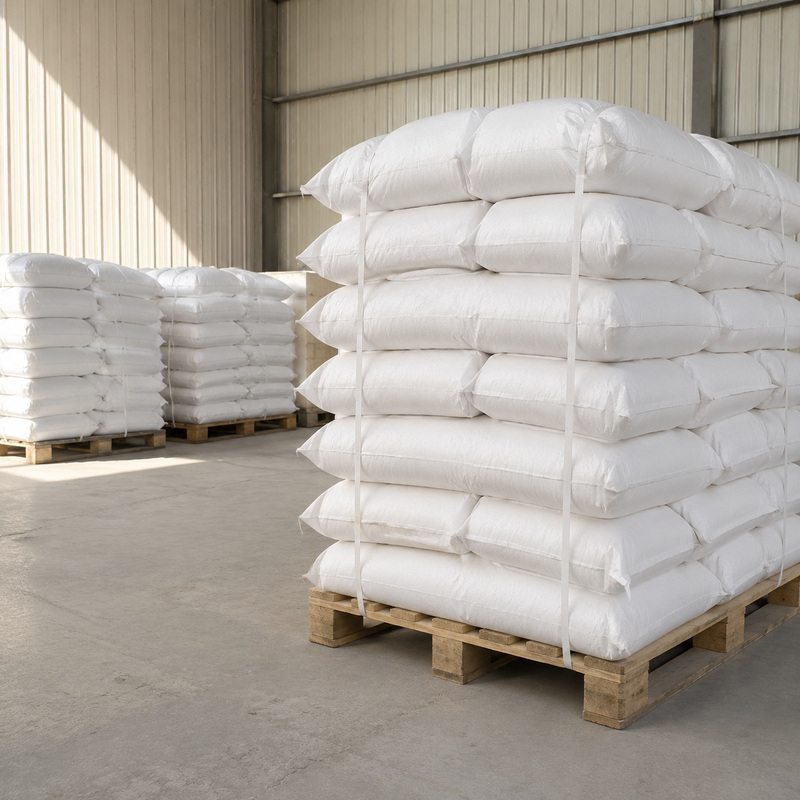
Store in a cool, dry, well-ventilated area below 30 degrees Celsius
Keep away from direct sunlight, heat sources, and moisture
Shelf life: typically 6-12 months in original, unopened packaging
After opening, re-seal the bag tightly and use as soon as possible
Do not stack more than 15 bags high to prevent compaction
RDP is a fine powder — use dust protection (mask, goggles) during handling
Avoid inhalation of airborne powder during bag opening and mixing
Ensure adequate ventilation in the mixing area
Compatible with standard dry-mortar mixing equipment
When evaluating RDP quality, focus on these key indicators:
| QC Parameter | Test Method | Significance |
|---|---|---|
Re-dispersion test | Mix with water, observe emulsion stability after 30 min | Confirms powder can fully re-disperse |
Moisture content | Oven drying at 105 degrees Celsius | High moisture reduces shelf life and re-dispersibility |
| Bulk density | Graduated cylinder method | Indicates particle integrity and anti-caking effectiveness |
| Film formation test | Apply dispersion on glass plate, observe at application temperature | Confirms film-forming capability at expected conditions |
| Ash content | Combustion at 550-600 degrees Celsius | Verifies anti-caking agent level and polymer purity |
Q1: What is redispersible polymer powder and how does it work?
A: RDP is a spray-dried polymer powder (typically VAE-based) that re-disperses in water when mixed into dry-mortar formulations. As the mortar cures, the polymer particles coalesce into a continuous film that bonds cement hydrates and aggregates, improving adhesion, flexibility, and water resistance.
Q2: What is the difference between RDP and HPMC in mortar?
A: RDP primarily improves adhesion, flexibility, tensile strength, and waterproofing through polymer film formation. HPMC primarily provides water retention, thickening, and workability. They serve complementary roles and are typically used together in dry-mortar formulations.
Q3: What is the recommended dosage of RDP in tile adhesive?
A: For standard C1-type tile adhesive, 2-4% RDP by weight of dry mortar. For enhanced C2-type adhesive with higher bond strength requirements, 4-6% RDP is commonly used. The exact dosage depends on substrate type and performance requirements.
Q4: Can RDP be used in self-leveling flooring compounds?
A: Yes. RDP is a key component in self-leveling compounds, typically dosed at 3-8%. It provides flexibility, abrasion resistance, enhanced substrate bond, and reduced surface cracking. For floor-heating applications, 5-8% RDP ensures sufficient flexibility under thermal cycling.
Q5: What is the shelf life of redispersible polymer powder?
A: Typically 24 months when stored below 30 degrees Celsius in original, unopened bags in a dry environment. Exposure to high temperature or humidity can cause partial caking and reduced re-dispersibility.
Shenyang Xingzhenghe Chemical Co., Ltd. is a professional supplier of redispersible polymer powder (VAE-based RDP) for construction applications.
We offer multiple RDP grades optimized for tile adhesives, EIFS, self-leveling compounds, repair mortars, and more.
Contact our technical team for grade recommendations, formulation support, and competitive pricing.
 How to Compare RDP Samples Before Changing Suppliers
 What Is Redispersible Polymer Powder (RDP)? How It Works in Dry Mix Mortar
 How to Select Redispersible Polymer Powder for Tile Adhesive
 Redispersible Polymer Powder for ETICS Mortar: Performance and Selection Guide